For the Migrant Memory and the Post-colonial Imagination (MMPI) project, remembering is central. Specifically, remembering the 1947 Partition of India, along with the 1971 Liberation War of Bangladesh and exodus from East Africa, and migration to the UK. Here, remembering is both creative in the form of its physical outcomes – poetry, art, music – and creative in the construction of the stories we tell. This story is a throwback to the project’s creative, collaborative community outputs around the time of the first South Asian Heritage Month in 2020.
Based at Loughborough University and funded by The Leverhulme Trust, the project was concerned with memory and how past events are remembered. Significant historical events, particularly the 1947 Partition of India, are remembered differently by the diverse communities impacted by this and subsequent events and these narratives of the past are interwoven into the present. The project was particularly interested in the process by which some things get left out of public versions of the past. For instance, why were South Asian perspectives on the British Empire, processes of decolonisation and the 1947 Partition largely absent in public history and memory in the UK? The absence of Partition from British collective memory was a great concern, especially as it was conducted by the British administration, led to one of the largest migrations and saw a staggering loss of life, family, relationships, and land. We wanted to gain understanding of diasporic narratives of Partition and what power these pasts have to challenge and reconfigure dominant stories of our shared past in the UK.
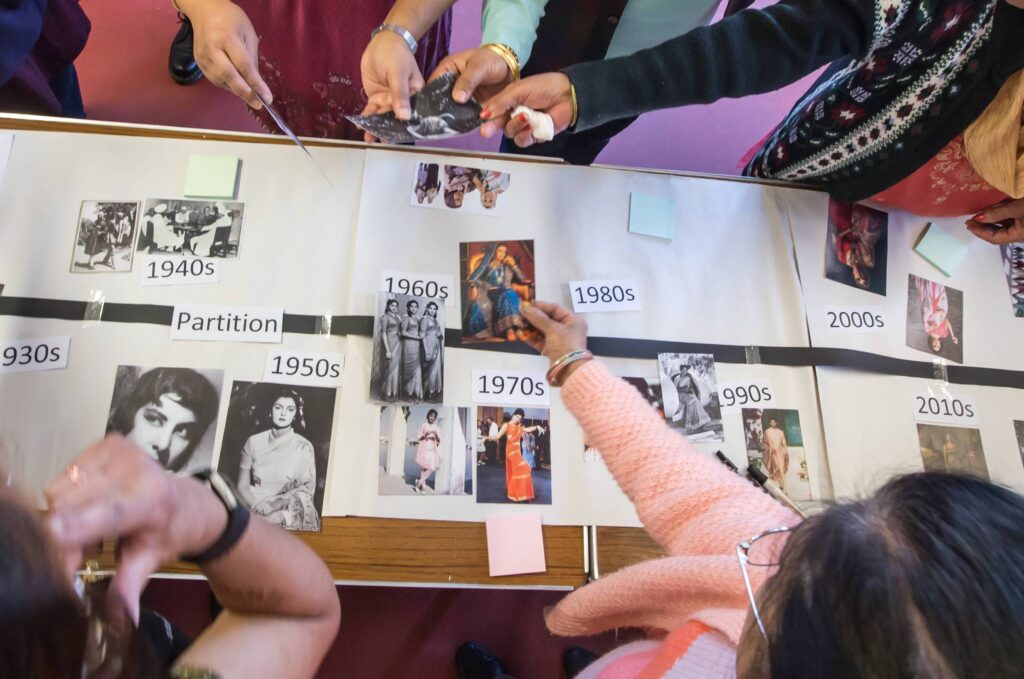
The project ran from 2017 – 2024, and during that time we worked with individuals, communities and groups of people of South Asian heritage from across religious, national, gender, generational, and socio-economic backgrounds in London and the Midlands to find out not just what is remembered, but how these pasts are remembered differently and transmitted across generations and in processes of migration.
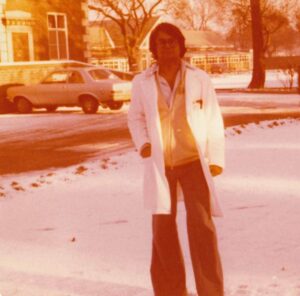
As part of the very first South Asian Heritage Month in 2020, we published a short series of blogposts. The first introduced the MMPI project, the second evoked the memories and senses of our food and memory workshops, the third focused in on photography and memories of migration and the fourth traced processes of remembering in the participatory animation of Altab Ali and the Battle of Brick Lane. Like everything at that time, the COVID-19 pandemic very quickly shifted the inaugural SAHM and the MMPI project online. For a research project that relied on place-based and in-person meetings, interviews and creative activities, this adaptation to remote participation was no mean feat. As part of our blog and in partnership with SAHM, we included a call for participation in our remote activities that reflected on memories of Partition, independence and migration. We had contributions from people in Leicestershire, London, Greater Manchester, and West Yorkshire, whose family stories were rooted in undivided India, soon-to-be India and Pakistan, and later India, Pakistan and Bangladesh. For instance, we received photographs of a harmonium that travelled from Germany to Karachi, British India, in the late 19th century, then from soon-to-be Pakistan to India just before Partition in 1947, and from post-independence India to the UK over 100 years since it first departed Europe. We received poetry, drawings and writing that reflected on remembering family memories of Partition and its consequences when the history was largely absent from British school curricula and media. Contributors sent in writing and songs that mapped family memories of British India, Partition, the Liberation war and migration from Bangladesh, as well as personal memories of experiences of racism and feelings of belonging by retracing parents’ migration stories and photographs.
These contributions formed the Remote Remembering Collection: (Inherited) Memories of Partition, Independence and Migration. As a whole, the collection speaks to (inherited) memories of British India, Partition, East and West Pakistan, Bangladeshi Independence and migration, highlighting that the past is still very much part of our present. The collection emphasised the significance of remembering the experiences and memories of these events today in the UK, their differences and similarities, and how they connect to and inform multifaceted senses of belonging and identities.
At the same time and more locally, we ran a remote project that explored how ‘India’ was imagined at home in Leicestershire, at a time when everyone had to stay in due to ongoing social distancing restrictions. The project was a way to stay connected when we were distanced and isolated and formed the online exhibition ‘India at “home”’. We asked what photographs, objects and music around the house evoked memories of ‘India’ (in quotation marks, to be open to the various ways ‘India’ is experienced and imagined). Interestingly, contributions included many photographs from East Africa. For instance, photos of families kitted out in the latest fashions in Uganda and Kenya and significant cultural places, such as the Indian Public Library in Mwanza, Tanzania, highlighting the twice migration experienced by many of the first-generation women contributors in Leicestershire. Photographs of family, weddings, Bollywood LPs (like Sholay and Kabhi Kabhie) evoked memories of life in, or trips to, India, memories of life in East Africa and subsequent migration as well as Indian community events and cultural practices in Leicestershire.
In East London, our ongoing collaboration with BritBangla also went online for the first South Asian Heritage Month. In 2019, our successful in-person Bengali Britain collaboration resulted in an exhibition and film that explored dual British and Bangladeshi identities and memories of undivided Bengal, colonialism, Partition, 1971 and life in East London. Following Bengali Britain, our collaboration continued at a distance with the short film, Memoirs of East Bengal. Memoirs of East Bengal is a collection of five clips in which BritBangla members share their experiences and reflections on their Bengali heritage at home in 2020. Poetry, photographs and a cup of tea serve to reflect on different family stories of the legacy of Partition on contemporary British Bangladeshi life, the impact of colonial ties on the movement from Bengal to Britain as well as the challenges and opportunities of growing up as British Bengalis.
As we started to emerge from lockdown, we worked on the hybrid Mixtape Memories project. Working in Leicester, a city which experienced longer social distancing restrictions, a music track was collaboratively produced from memories of migration. The track was then turned into the co-produced music video, ‘Unexpected Mountains’. The collaboratively chosen theme for this track was clear from the very first workshop: resilience, in the face of Partition, migration, loss, racism and discrimination, and keeping connections through culture, mother tongues and memories. At the same time, in London, hybrid Partition walking tours were developed with A little History of the Sikhs, evoking the memories and histories that connect events in India with the streets of London.
At a time of social distance, these creative memories showed the diversity of people, places and experiences, yet highlighted intertwined histories, communities and senses of belonging. We are still analysing and writing up the research from this project, but these collaborative community-based creative outputs are hugely significant in terms of their recollections and connections despite the distance in space and time.
For more creative outputs from the MMPI project, see 50 Years of Bangladesh through 50 Objects, Memories of Mothers and Grandmothers and Memory, Poetry and Identity with BSK London.