Diversity

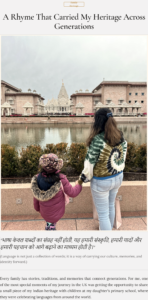
A Rhyme That Carried My Heritage Across Generations
“भाषा केवल शब्दों का संग्रह नहीं होती, यह हमारी संस्कृति, हमारी यादों और हमारी पहचान को आगे बढ़ाने का माध्यम होती है।” (Language is not


Although the migration of South Asians to the UK goes back many centuries, numbers grew significantly during the 50s, 60s and 70s. Many travelled here directly from South Asia, whilst others (known as ‘twice migrants’) came through countries that they had settled in throughout Africa.
Whilst some families made their own choice to move to the UK, some had no other alternative but to leave the country they knew as home. This included almost 60,000 Asians who were expelled from Uganda in 1972 and had to rebuild their lives in the UK.
Many South Asians went onto work for the NHS and we spoke with some colleagues to learn about their experiences of moving and settling down in a new country.
I was born in a small farming village in a rural area of Punjab, India. We lived a simple and humble life and I remember having an enjoyable, happy and carefree childhood. We lived in our own little bubble and I didn’t really know much about the rest of the world at the time.
My uncle from England was visiting us and suggested I go to live with him to better my education and prospects. As my school was quite basic without many facilities, my parents agreed and on 25 February 1968, I moved to a new country. At the age of 12, I was very excited to be flying on a plane and travelling to a big city. But it was also very frightening, especially as I was leaving my parents, brothers and sister and there was a fear of the unknown.
There were only 2 Asian families around us when I first arrived in West Bromwich. I didn’t speak, read or write English so I struggled initially as I was thrown in at the deep end. Kids can be hurtful and intimidating, especially when you don’t understand what they’re saying. I had no choice but to learn English very quickly and became close friends with a Punjabi speaking boy who helped me to get by.

A couple of boys that I looked up to went onto study Medicine, so I decided that could also be the career path for me. I went Swansea University to study Biochemistry and three years later, I was more educated, academically minded and making wiser decisions. I decided to study Medicine and stayed in Wales for a while after qualifying. After gaining more experience in the Birmingham area and in Edgware Hospital, I began working as a GP in Warwickshire in 1988 and have been there ever since. I will always be very grateful to West Bromwich Borough Council who supported me financially with a student grant. It’s thanks to their help and support that I went on to become a Doctor.
Working in hospitals in the 1980s was very different to how it is now. The workload and pressure felt much less at the time, as we had more resources and staff available. Technology, diagnostics and equipment have all changed vastly over the years, but this means the actual cost of care has spiralled in what we know as a free healthcare service.

I am proud to say that both of my sons followed in my footsteps to pursue careers in the Medical field. My eldest studied Medicine in Oxford and shortly after qualifying, he went on to gain some consultancy experience. He learnt about pharmaceutical and drug development then decided to set up his own pharmaceutical company. Working alongside Queen Elizabeth Hospital, Birmingham, he has been involved in initiating drug trials for the treatment of COVID-19. My younger son has just completed his Masters in Immunology, so the healthcare industry is definitely in our blood.
I have been involved in charity work, including arranging a Punjabi music video and concert for youngsters to say to stay away from drugs. We also raised money for the Gujarat Earthquake appeal in the past. Whilst studying in Cardiff, everyone was doing the Conga at parties, so I thought we needed something similar for Asian parties. This inspired me to write a song called ‘Rail Gaddi’ which has been played at celebrations for the last 40 years and even featured in the Bend it Like Beckham soundtrack. I have also written over 80 songs which have been published in a couple of books. Keeping our culture close to our hearts is very important, no matter where we live.
As we all know, there has been extra pressure on the NHS over the last 2-3 years. As GPs, we did our best to support our patients and I was interviewed several times for local radio stations throughout the Midlands. We spoke about the importance of following Government guidance to prevent the spread of infection. We encouraged people to have COVID-19 vaccines, reiterating it was safe and the best way to protect ourselves. We passed on advice about mental health issues during lockdown with self-care tips and who to contact for help. We delivered shows in Punjabi and Hindi, as well as English to make sure we had good coverage for listeners in the West Midlands area.
As a doctor, my message will naturally be about leading healthy, happy lives. It’s my duty to promote ‘prevention is better than cure’. It’s important we all attend our routine screening appointments, as picking something up early saves lives. Although diabetes and high blood pressure are common in South Asian communities, we can improve our chances of better health by educating ourselves and making lifestyle changes. It is far more difficult to treat and manage conditions later on in life.
The same applies to vaccinations – having COVID-19 and flu vaccines means we are less likely to be hospitalised or die from these infections. It’s equally important for children to have their regular immunisations throughout the years. And finally, if a doctor advises you to take medication and have regular check-ups, please make sure you follow this up. We can all live longer and have fewer problems if we take responsibility for our own health.
You can find out about the different types of screening, information about vaccinations and other useful health advice on nhs.uk
“भाषा केवल शब्दों का संग्रह नहीं होती, यह हमारी संस्कृति, हमारी यादों और हमारी पहचान को आगे बढ़ाने का माध्यम होती है।” (Language is not


My Vitiligo Journey: From Silence to Empowerment This year marked my 17th World Vitiligo Day, which took place on 25th June 2026. It was a
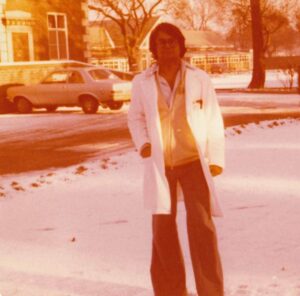

First-generation immigrants arriving in the country faced some challenging times. They often came with very little in terms of personal possessions, encountered language barriers and

Although the migration of South Asians to the UK goes back many centuries, numbers grew significantly during the 50s, 60s and 70s. Many travelled here
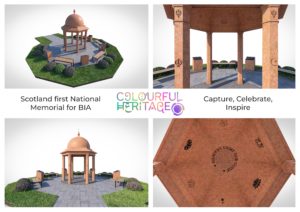

Artists impression of Scotland’s First BIA Memorial Colourful Heritage, a charity based in Scotland were granted planning permission by Glasgow City Council in December 2022
When I heard this year’s South Asian Heritage Month theme is Unity in Diversity, my first thought was of the power of trust, relationships, and