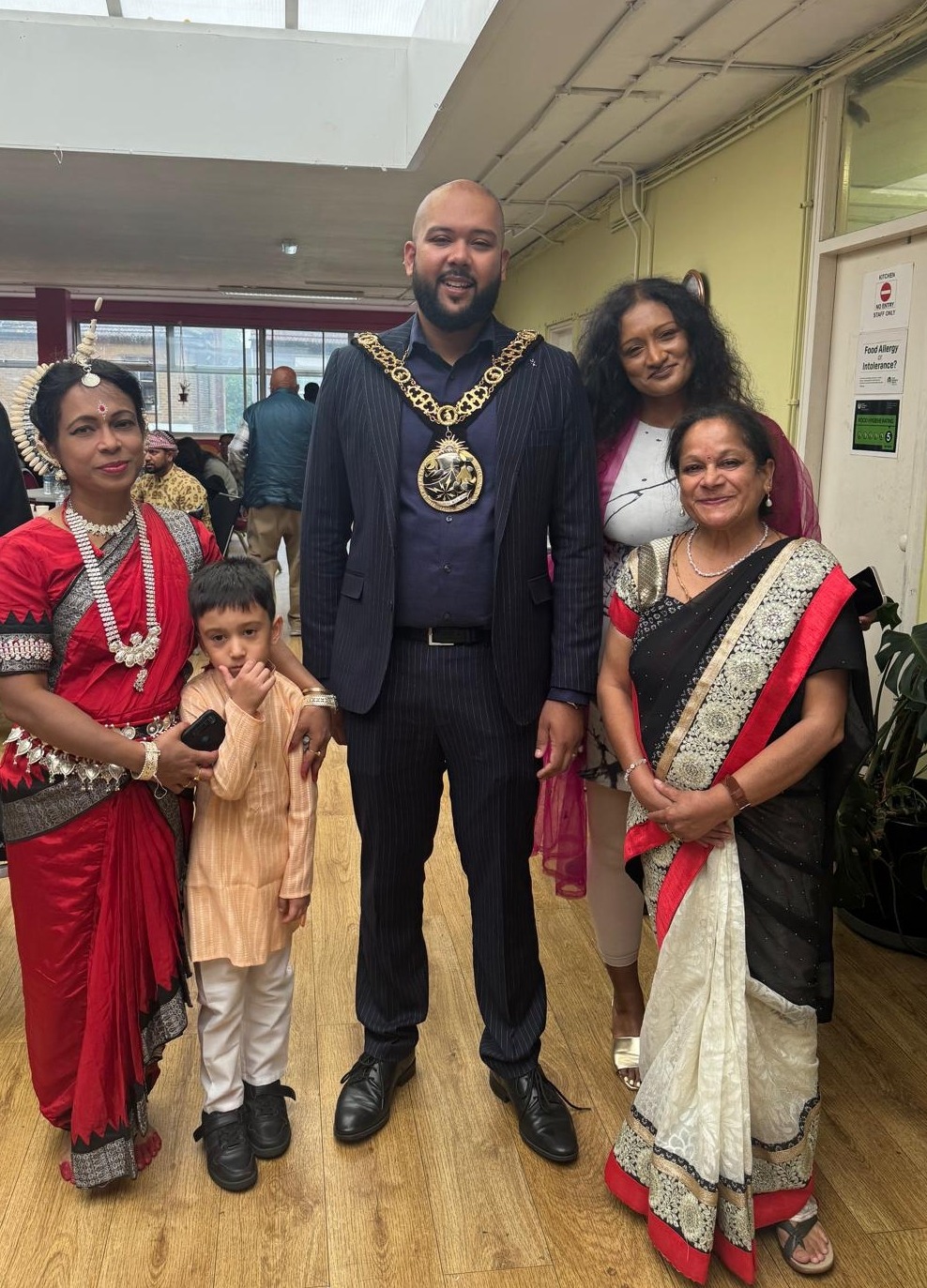
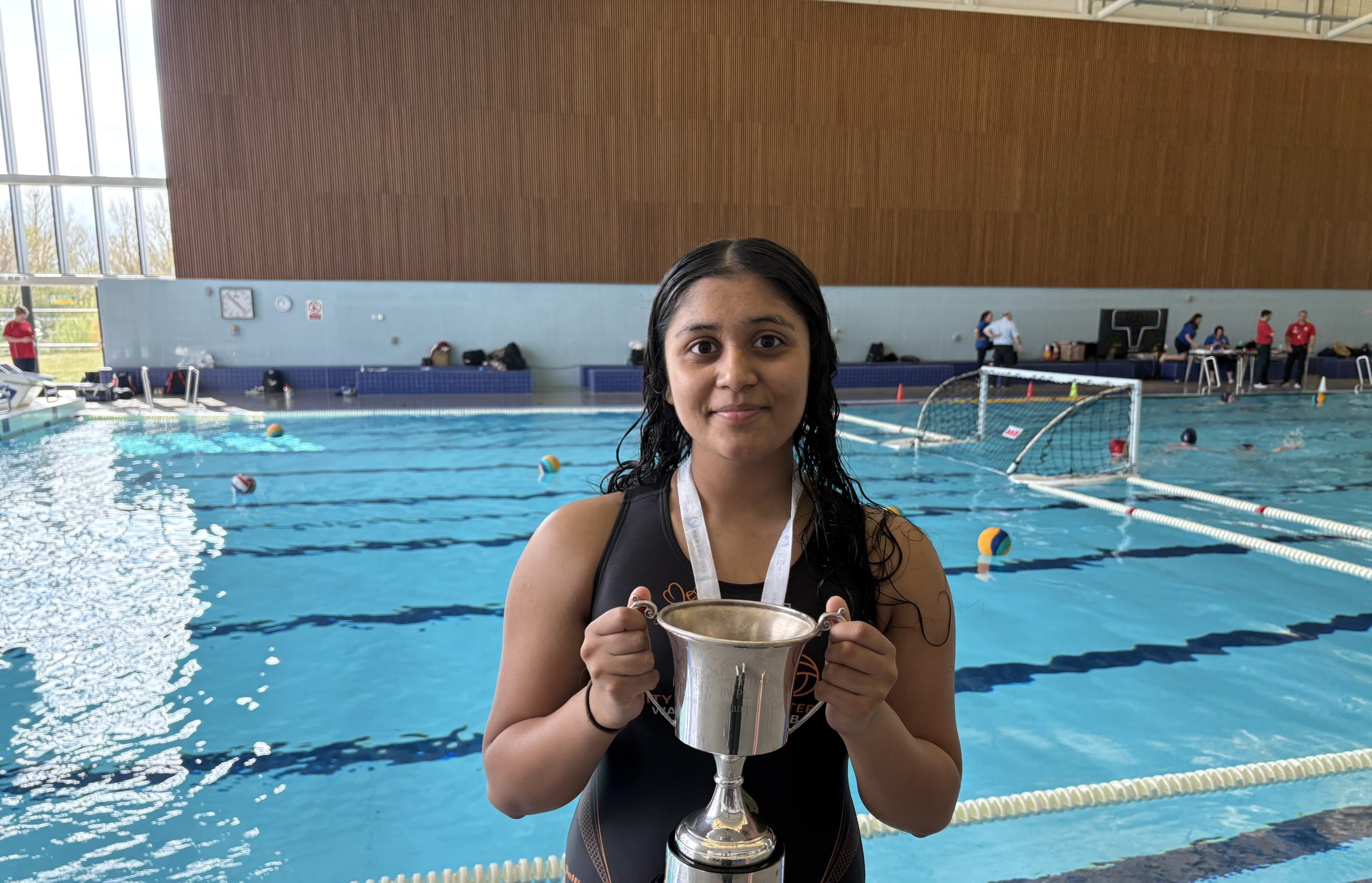
Shahida was born and raised in Cambridge.
She writes historical fiction, raising awareness of South Asian history, culture and heritage. Her books are 'Lascar' and 'An Ayah's Choice'.
Share this story
Facebook
Twitter
LinkedIn
WhatsApp
Email
Print
Photo by gkw09
The South Asian community in the UK has a long history, with waves of immigration occurring in the mid-20th century. These early immigrants faced considerable challenges. Some came to study and others were professionals, such as lawyers, doctors and politicians. Over time, they established themselves, contributing significantly to the cultural fabric of the UK.
There has been a notable Muslim presence in Cambridge for over 100 years, with the majority coming to study at the University.
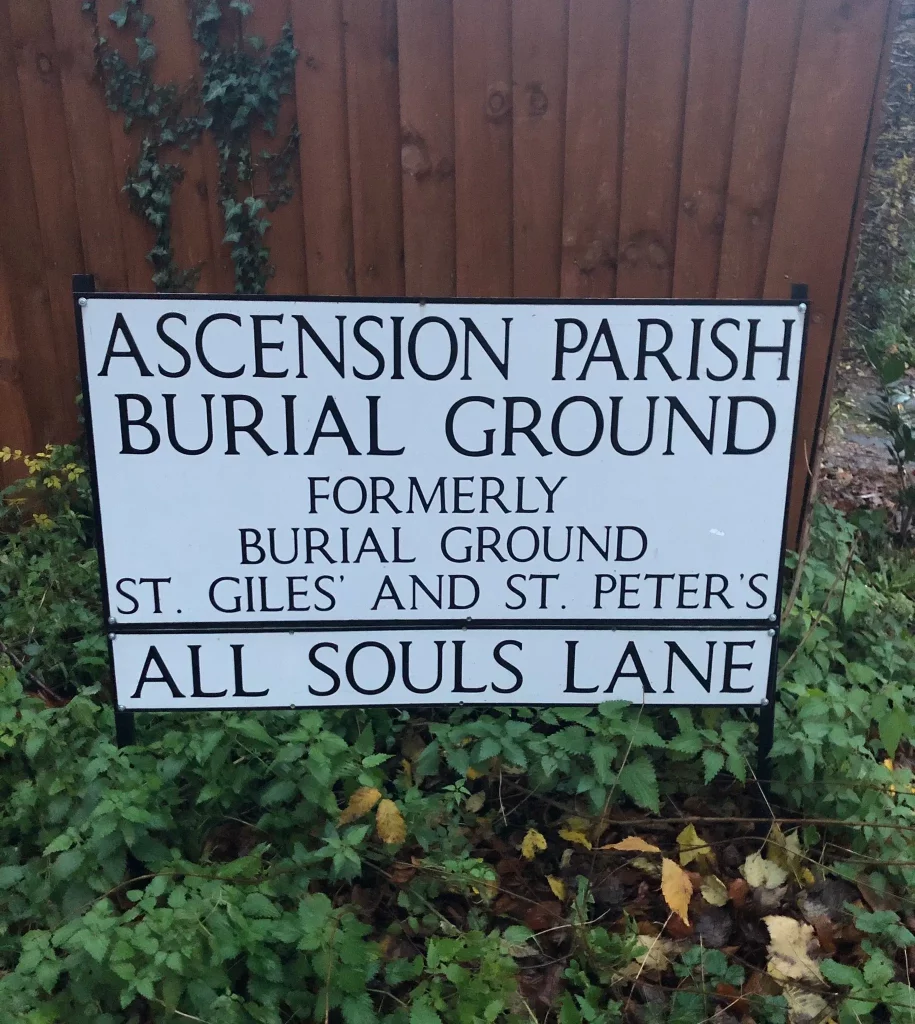
There are 46 cemeteries in Cambridge. However, there are five hidden Muslim graves at the Ascension Parish Burial Ground.
The Ascension Parish Burial Ground, Cambridge. Photo: Faruk Kara.
The Ascension Parish burial ground (formerly St Giles’ burial ground) was opened in 1869 when the population of Cambridge, as with most Victorian cities, had grown dramatically. The parish of St Giles covered a large area to the north and west of the River Cam within which many scholars, scientists and university staff lived and worked. Thus the burial ground contains the graves of three Nobel Prize winners, seven members of the Order of Merit, eight college masters, fifteen knights of the realm, and 39 people with entries in the Dictionary of National Biography. It is a burial place for all who lived in the Parish, of all faiths and none. These include Anglicans, Non-Conformists, Muslims, Jews, and those of many other faiths. The age span of those buried is from one hour to over 104 years. (Friends of Ascension Parish Burial Ground newsletter 2017).
However, two of the Muslim graves are as follows, with the first possibly being the oldest:
AHMAD, IQTIDAR UDDIN (c.1895-1918) was a student. Born on 6 June 1895 at Dewa District Barabanki. He was the son of Molui Rafi Uddin Ahmad of Dewa District Barabanki, Oudh, India. He was educated privately as admitted pensioner (a pensioner was an ordinary fee-paying student). Tutor was: A.S. Ramsey and admitted to Magdalene College on 12 October 1914. According to the Admissions Register 22 men came into residence in October 1914. The college archives have the matriculation photo from that year, but unfortunately it only has 17 men in the photo, not including Iqtidar. There are no further photographs of him in the archive. He graduated in Economics Tripos but took Law Tri ii as an LL.B in June 1918, which he failed.
He died of pneumonia following influenza in November 1918 at the age of 23 and was buried with “Mohammedan rites, the funeral service being conducted partly in the Second Court and partly in St Giles’s Cemetery”.
His memorial tells us that he was from an elite family (‘taluqdar’) and that his father was a Muslim scholar (‘molvi’). Substantial cohorts of students from the Sub-continent studied at Cambridge. Iqtidar’s is believed to be the oldest Muslim grave in Cambridge.
On 25 December 2018, Iqtidar’s father, Rafi Uddin Ahmad, wrote a moving letter to his son’s tutor at Magdalene College, Cambridge. The letter, which is preserved in the Magdalene College archive, expresses Rafi’s gratitude for the trouble the tutor took to provide Rafi with all the details of his son’s passing, including interring him with Mohammedan rites. With great dignity at such a tragic time, he further writes that he has sent a telegraphic money order to cover the costs and asks for any other outstanding costs to be sent to him, along with Iqtidar’s personal possessions. The letter reads:
Nayagaon
Lucknow
India
25 Dec. 1918
Dear Sir
This mail has brought me the anxiously awaited letter with the details of dear Iqtidar’s passing away. I have to thank you from the bottom of my heart for the trouble you took about my poor dear boy and your kindness in giving me all the details. May Heaven recompensate you, I cannot, for all that you did for the boy. It pleased Heaven to take away my youngest boy aged 15 years on 26th October, also through a [-word indecipherable-] accident out here. And then the further calamitous news that Iqtidar had left us while far away in a foreign land, reached me. The effect on his poor mother and us all needs no description.
His last writing and pencil which you so thoughtfully send me and for which I must specially thank you, will be always treasured up by us.
It has gratified us to know that my poor boy was interred with our own rites. If you will kindly take the further trouble of getting an estimate of costs of a marble tablet for the grave, I should feel highly obliged.
Our desire is to have all effects (including books, clothes, photos, and all writings etc.) sent out to us here. The furniture and the bicycle, if any, should be disposed of there for what they will fetch. Those things which will come out should be got packed in his trunks and other packages and despatched to the Railway Station, Barabanki, Oudh, India.
I sent by telegraphic money order at the very end of September 1918 £300 through the Allahabad Bank here and I suppose the amount must be to a great extent intact as the poor boy fell ill so soon after. May I mention to trouble you to get a list of the sums due to him from the College, Inns of Court, and the bank so that I will know the full sum available there. You can realise the sums if possible and retain them till I let you know. I am writing to the [-word indecipherable-] also. My permanent address is P.O. Dewa, District Barabanki, Oudh, India, and letters sent there will always be certain of finding me. A list of things despatched here should be sent off [-word indecipherable-] mail at the same time.
Thanking you again for all you have done in respect of my dear boy.
I remain,
yours sincerely and gratefully,
Rafi Uddin Ahmad.
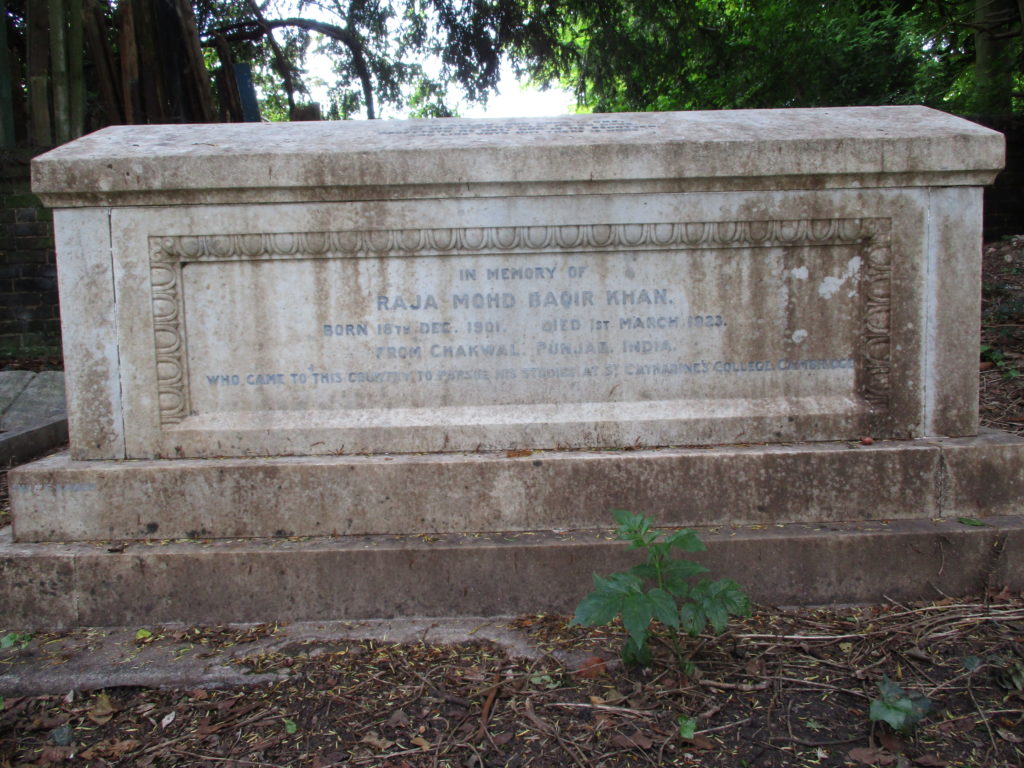
KHAN, RAJA MUHAMMAD BAQIR (1901-23), a law student. From Chakwal, Punjab. An undergraduate at St Catharine’s College killed in a motorcycle accident. ‘The funeral took place at St Giles’s Cemetery … carried out according to the Islamic religion’, conducted by the Imam of the Woking Mosque also known as The Shah Jahan Mosque on Oriental Road, Woking, England, is the first purpose-built mosque in the United Kingdom, built in 1889.
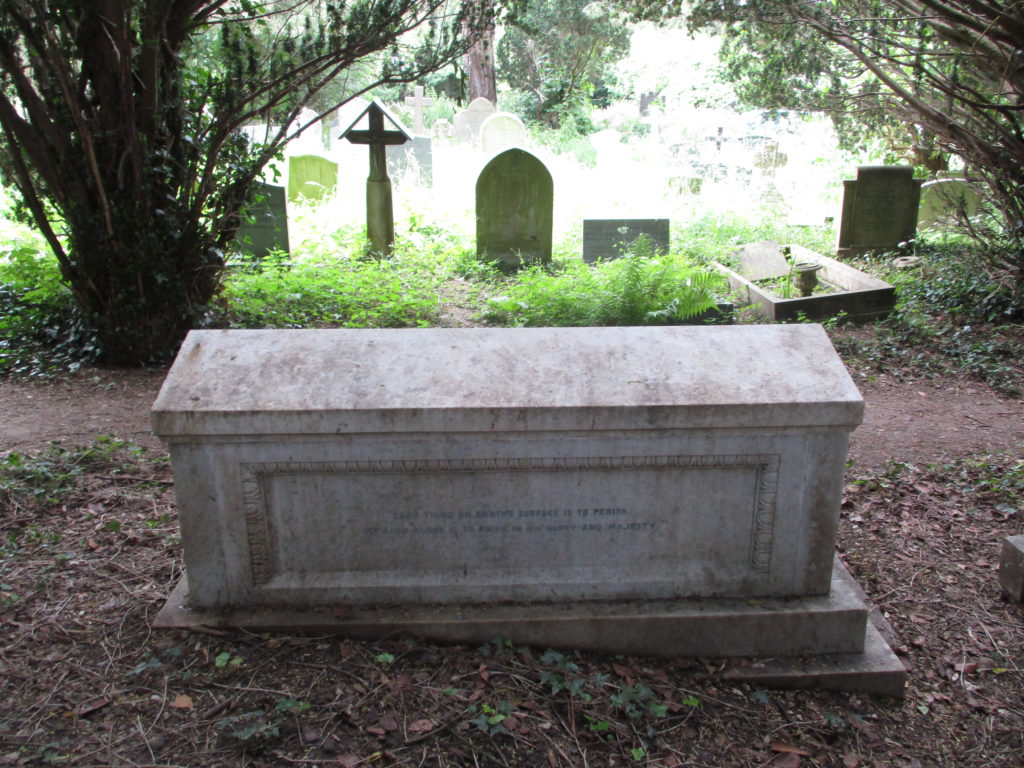
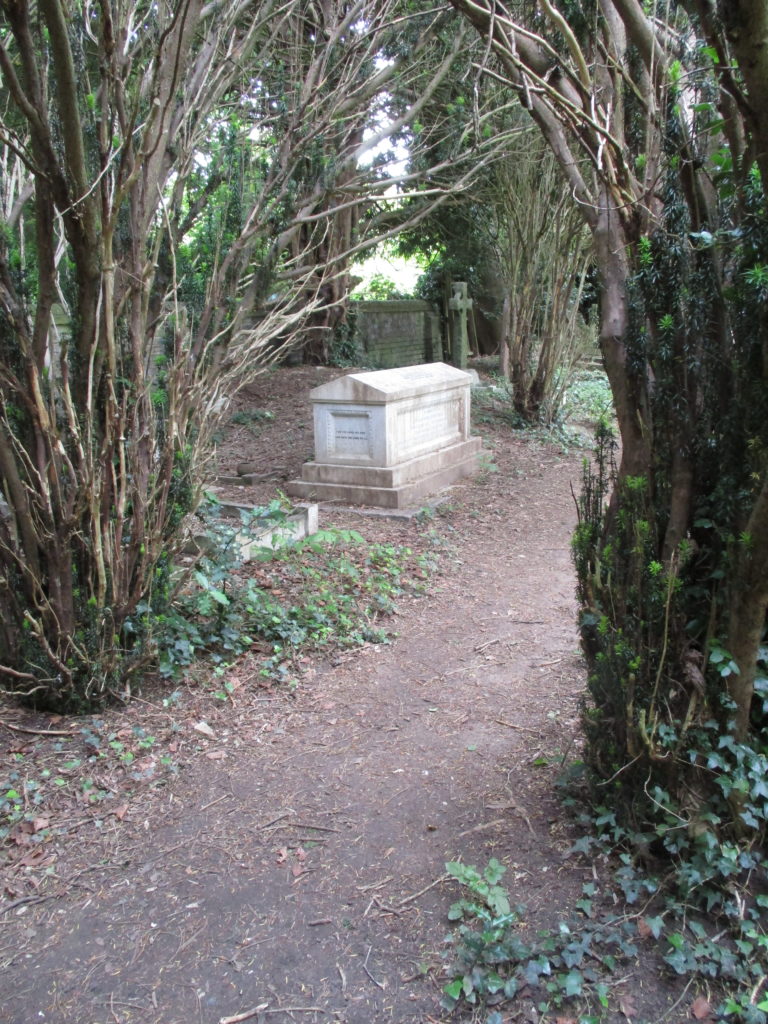
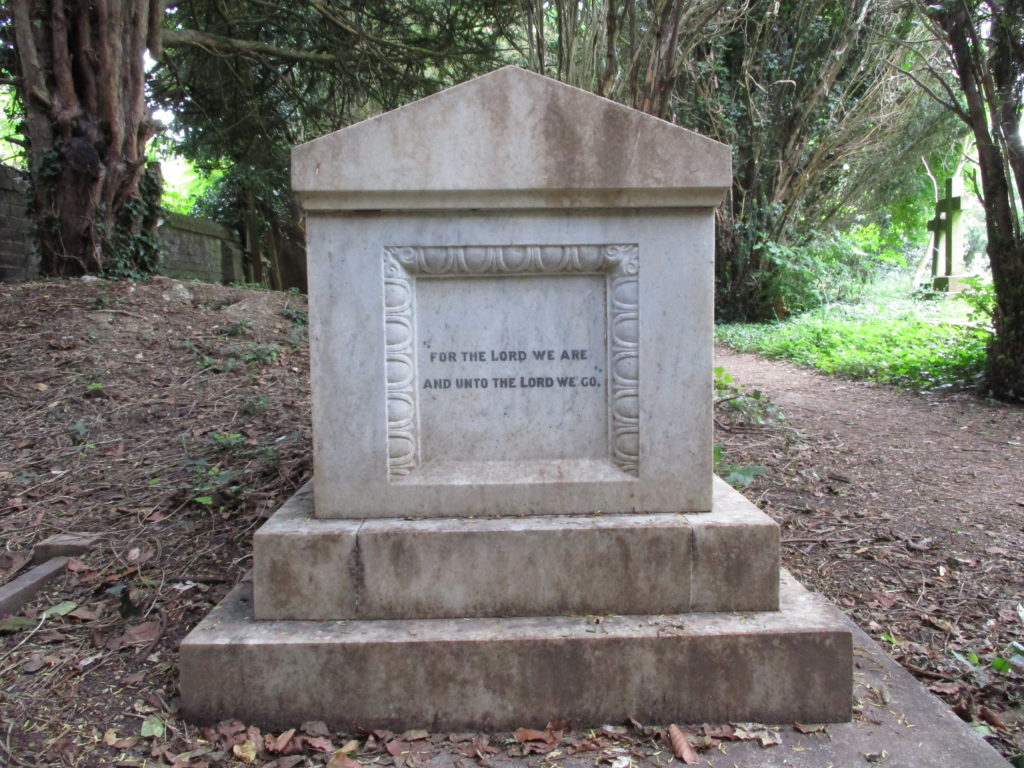
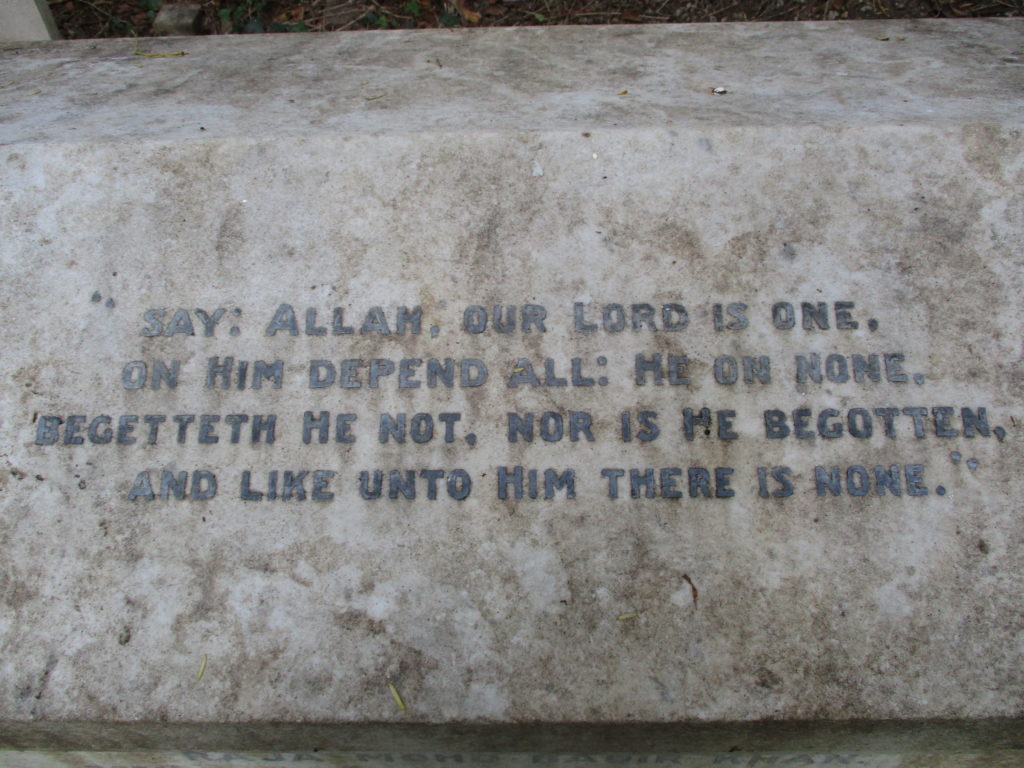
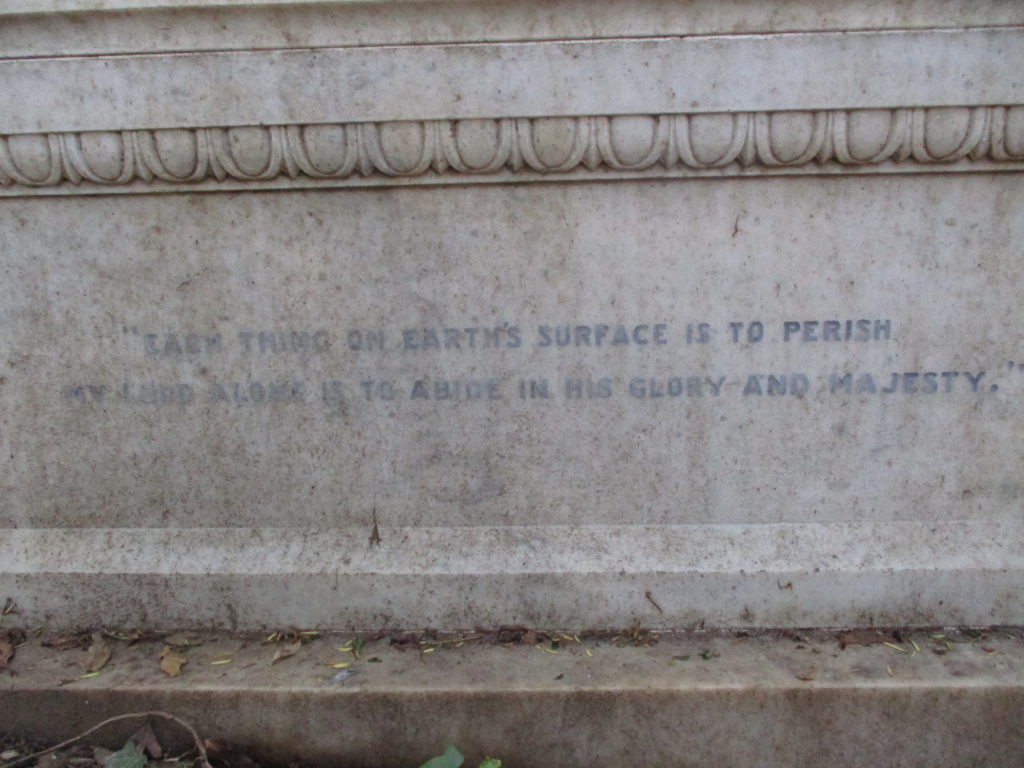
‘Practically all of the Indian students at the University, numbering over 150, were present.’ Wreaths included one from the Cambridge Muslim Association. His family’s ancestral lands had been expropriated by the British after the Indian Rebellion of 1857. He was one of thirteen children, six of whom served in the British Indian army, three becoming major-generals and three brigadier-generals, one of them the first Muslim major-general in the British army. A cousin, Zulfiqar Ali Khan, was among the leaders of the 1977 coup against President Bhutto. The large stone sarcophagus, unique in the Ascension, has a quotation from the Qur’an.
The tomb of Raja Muhammad Baqir Khan at the Ascension Parish Burial Ground, Cambridge. Photo: Faruk Kara.
The inscription on the lid of the chest tomb reads: ‘Says Allah: Our Lord is one, on him depend all. He on none. Begetteth he not nor is he begotten’- A passage from Qu’ran 112:1-4.
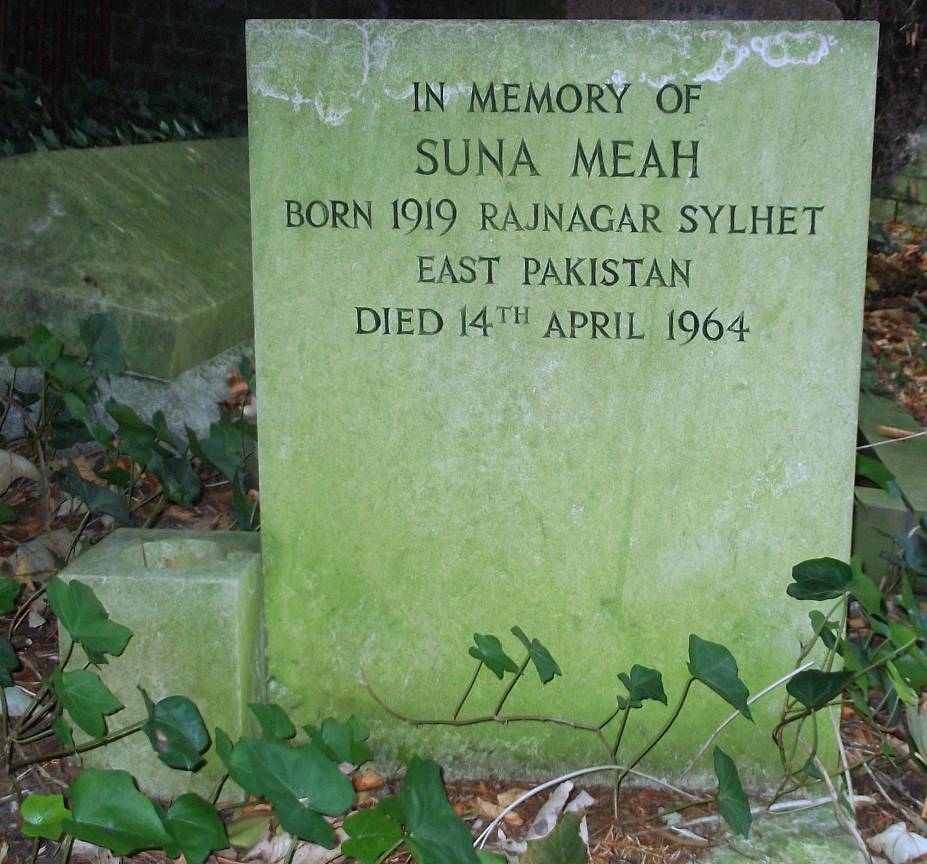
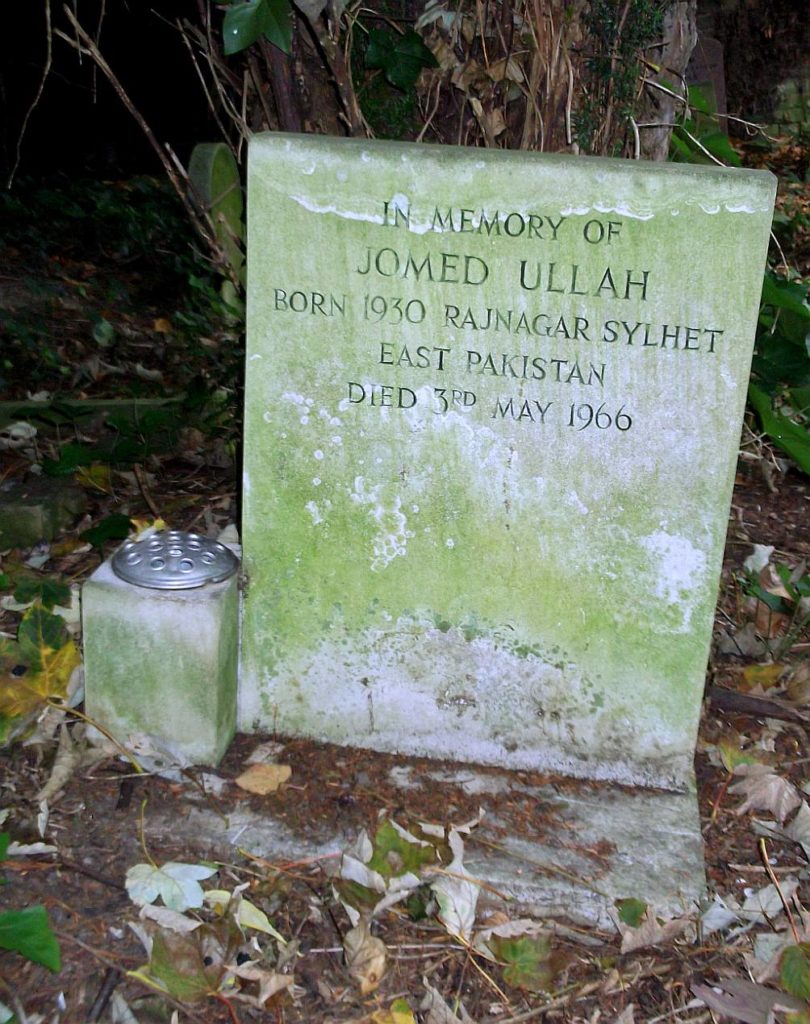
My son Ibrahim was tagged in a Facebook post about two Muslim graves in Cambridge in 2020. The person who tagged him asked if we knew of the graves. We got in touch with the Friends of the Burial ground. Professor Mark Goldie, a Fellow at Churchill College, kindly provided information about the Muslim graves. The gravestones were marked with the birthplace of East Pakistan.
The graves are of Suna Meah and Jomed Ullah. They are also buried at the grounds. Suna Meah (also spelt Sona Meah) aged just 43, was struck by a bus on 14 April 1964 on Maid’s Causeway in Cambridge. He lived at 15b Malcolm Street. He was classed as a ‘labourer’ Pakistani national. An inquest was held on 22 April 1964.
His death certificate states that he died at Addenbrooke’s Hospital, Hills Road, and that the cause of death was ‘multiple injuries sustained as a result of being struck by an omnibus whilst crossing the road’. Jomed Ullah died on 3rd May 1966 at Addenbrooke’s Hospital in Trumpington Street (the old Addenbrooke’s Hospital) at the age of 35. He lived at 15 King Street. He died of a ‘subarachnoid haemorrhage and a polycystic kidney’. Jomed Ullah had no other family members here.
A sad end to both lives, as these men came to England for a better life.
The fifth grave belongs to Abdul Hashim who died on 28 October 1963.
To acknowledge and cater for the local Muslim community, Cambridge is opening its first dedicated Muslim cemetery. In April last year, Cambridge Central Mosque became the owner of 35 acres of woodland at Brinkley Woodland Cemetery, kindly gifted by an anonymous donor. It will provide an estimated capacity for 20,000 graves.
Each Muslim grave adds a piece to history of Muslim heritage in Cambridge, stories of struggles, successes and major contributions to the local community and economy.
The exhibition ‘Unsung Heroes of World War I’ featured historical artifacts, photos and news clippings on the Asian (Indian, Nepalese Bangladeshi – the Indian subcontinent, along with Singapore, Malaysia, Indonesian soldiers in WW1, as well as other moments in South Asian history.
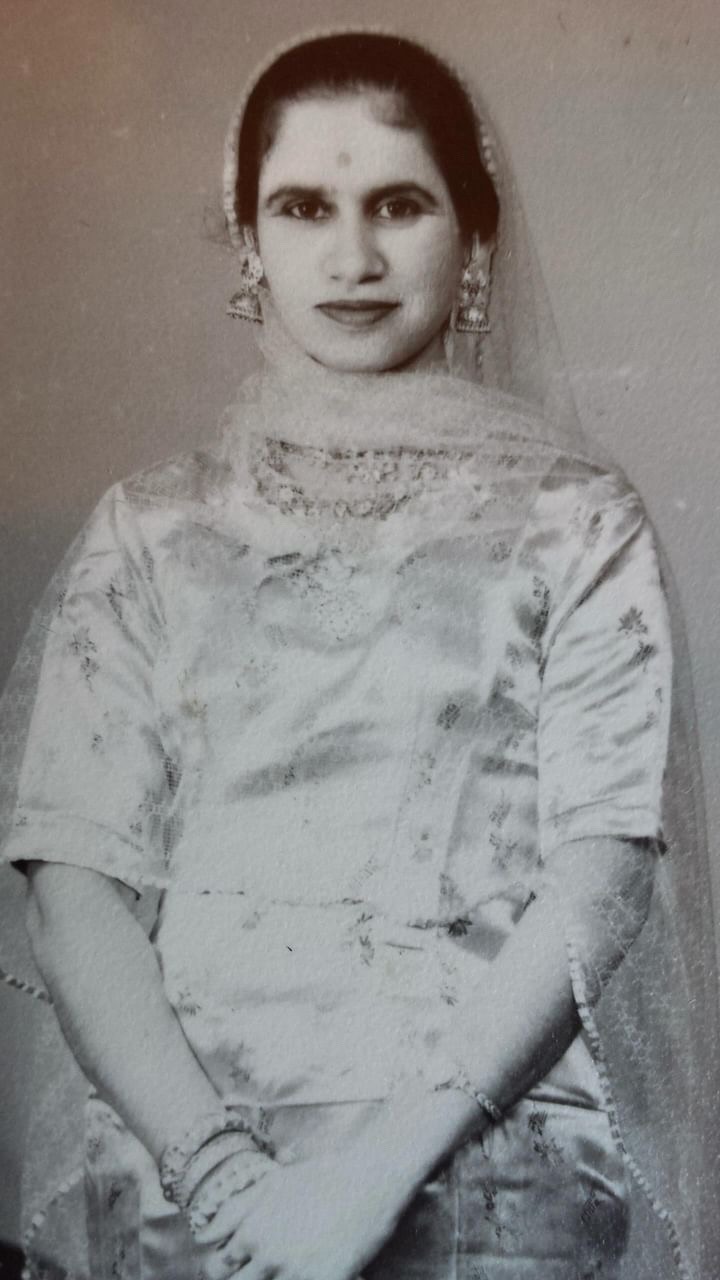
As the saying goes, “Like mother, like daughter.” In the case of creative talents, this couldn’t be more true. The influence of a mother’s creativity can leave a lasting impact on her children, shaping their own artistic endeavours and passions. In this journal I explore the profound impact my mother’s creative legacy has influenced me and how Sohavi was truly born. Roots to routes explores my late mothers life journey from birth in Kenya to India as a teenager and eventually returning to Kenya in her 20’s , to marry my father Sardar Tirlochan Singh Dhamu, to emigrate to London from Nairobi in October 1973 and live out the rest of her life. Despite experiencing loss and trauma, she endured difficulties n her younger years and made the best of her life in my fathers trusting hand, he led her to a new life in London.
To provide the best experiences, we use technologies like cookies to store and/or access device information. Consenting to these technologies will allow us to process data such as browsing behaviour or unique IDs on this site. Not consenting or withdrawing consent, may adversely affect certain features and functions.
Functional
Always active
The technical storage or access is strictly necessary for the legitimate purpose of enabling the use of a specific service explicitly requested by the subscriber or user, or for the sole purpose of carrying out the transmission of a communication over an electronic communications network.
Preferences
The technical storage or access is necessary for the legitimate purpose of storing preferences that are not requested by the subscriber or user.
Statistics
The technical storage or access that is used exclusively for statistical purposes.The technical storage or access that is used exclusively for anonymous statistical purposes. Without a subpoena, voluntary compliance on the part of your Internet Service Provider, or additional records from a third party, information stored or retrieved for this purpose alone cannot usually be used to identify you.
Marketing
The technical storage or access is required to create user profiles to send advertising, or to track the user on a website or across several websites for similar marketing purposes.
 South Asian Heritage Month dates changed to "July" from 2026 — Learn more here →