I was born and raised in the concrete heart of the Maldives, in a home where tradition lived in
the quiet details of daily life. Both sides of my family were filled with artists and storytellers,
and I grew up surrounded by the hum of creativity in every corner. Art was never just a hobby;
it was part of who we were as a family. I sketched, painted, and photographed, often turning to
the folktales for inspiration.
My fascination with tradition began with folktales. I remember listening to my aunt telling me
stories of “Handi Ganduvaru Dhonkamana”, the fair lady of the spirit’s palace. She wore the
“Dhivehi libaas”, our traditional dress, with its intricately braided neckline. That image stayed
with me. Over the years, I wore the libaas proudly for school concerts and events. And when I
left the Maldives for studies abroad, the first item I packed was a pink libaas, a gift from my
mother. It was not just a piece of clothing; it was my identity stitched into fabric.
Living abroad opened my eyes to other cultures and stories. Yet instead of pulling me away
from my roots, it deepened my appreciation for my own. I returned home trained as a
radiographer and worked in healthcare for over a decade. But somewhere in the routine of long
shifts, the part of me that loved stories, and tradition began to fade.
Burnout forced me to pause and take a break. During that much needed break, my creative side
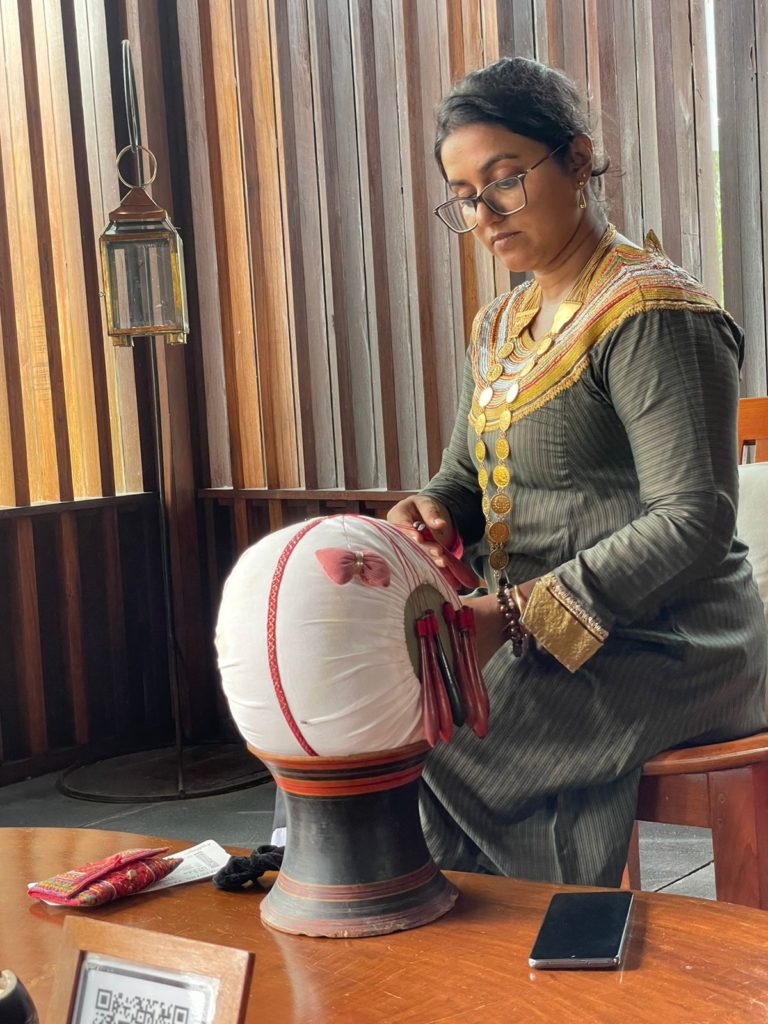
resurfaced. An aunt, a seamstress, invited me to help her make a libaas. I embroidered the
neckline embellishments, even though I had never done it before, nor had I ever seen the
process. I made mistakes, misaligning patterns that symbolize our ancient connections to the
world. But under the guidance of my stepfather, whose mother was once a master of the craft,
I began to learn what made each embellished neckline so different.
Then, during the COVID-19 lockdown, I stumbled upon a course teaching kasabu gethun, the
traditional weaving technique used for embellishing the libaas. I signed up immediately. I
learned not just the method, but also that this centuries old craft was barely documented.
That realization became a turning point. I began investing my earnings and time into meeting
artisans, recording their knowledge, and dedicating myself to the preservation and
documentation of the Dhivehi libaas. I now work part-time in healthcare and full-time as a
researcher and advocate for the craft. I also use it as a tool for healing, teaching it as creative
therapy and rehabilitation.
Today, my heritage is not just a part of my past; it is the foundation of who I am. It lives in the
stories I carry, the art I create, the communities I serve, and the legacy I hope to protect for
generations to come.
By Naduha AbdulMuhsin
South Asian Heritage Month dates changed to "July" from 2026 — Learn more here →