This South Asian Heritage Month, as the Royal British Legion explores the theme ‘Roots to Routes’, we honour the extraordinary journey of Honorary Captain Gian Singh VC. His story, rooted in the earth of Punjab and culminating in the highest recognition for valour, is a testament to courage and devotion to service.
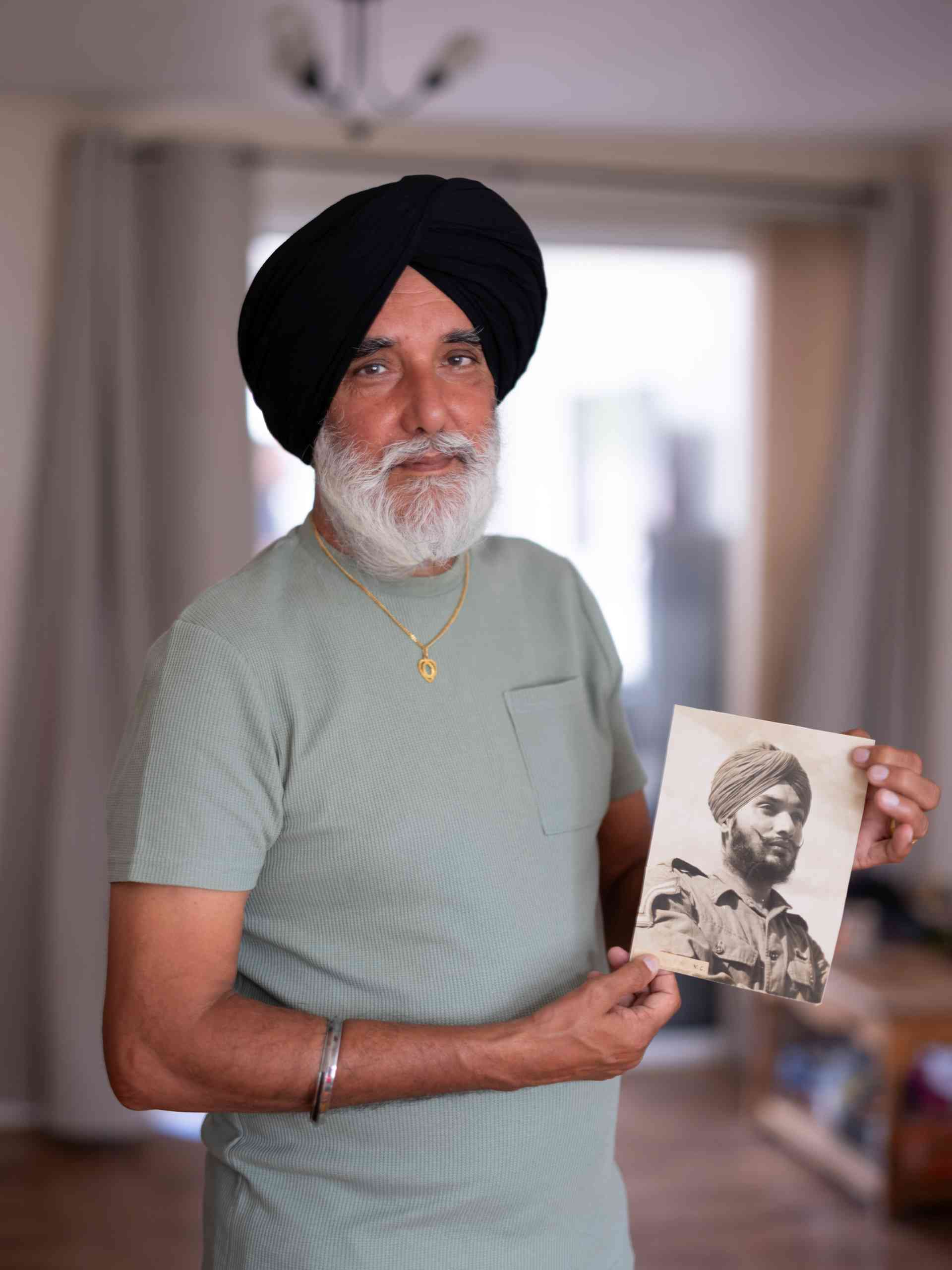
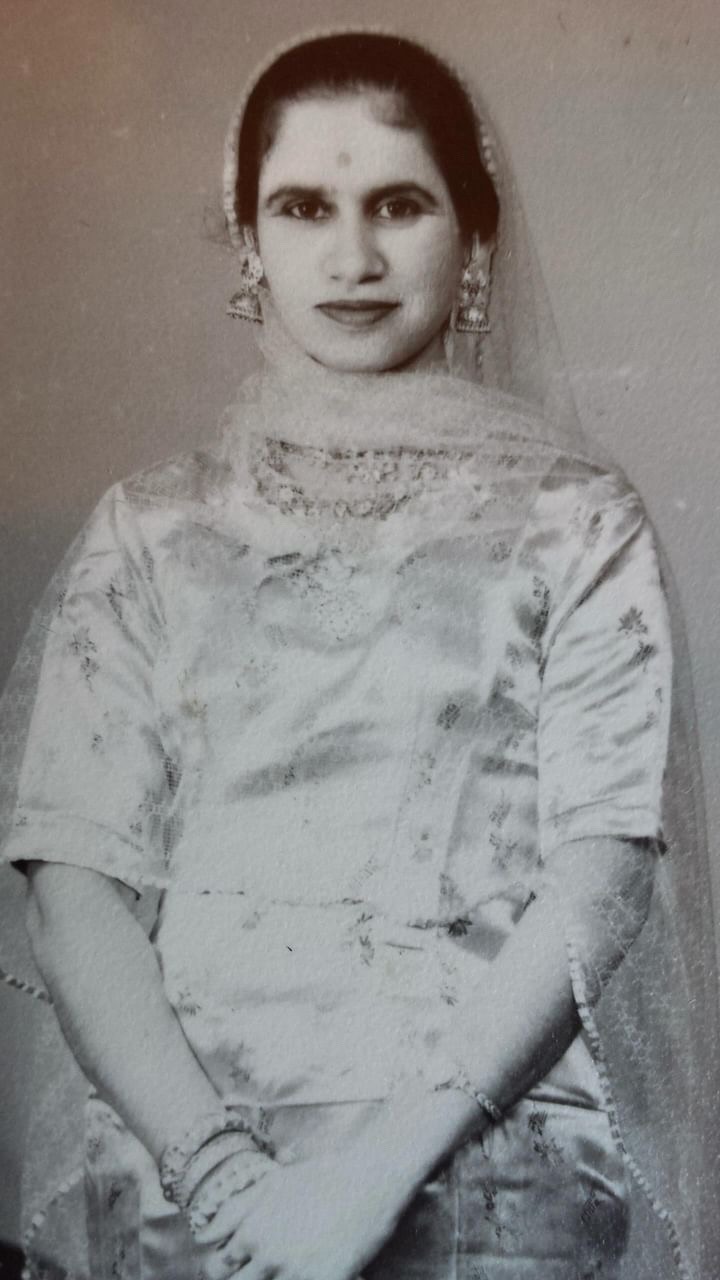
Gian Singh was born in the village of Sahabapur, Punjab, into a farming family. His early life was shaped by the land and the quiet strength of his mother, particularly after his own father, a soldier in British forces serving in the First World War “never came back from the army”. This profound loss cast a shadow, yet it perhaps also sowed seeds of determination. His son, Charanjit Sangha, often ponders the weight of this history: “Sometimes I wonder how my Grand-mum would have thought about sending… [my dad] you know, losing her husband in the army and then sending her son to the same army as well. Sometimes I do think about how it must have been very… very difficult for her.”
At the age of seventeen, in 1937, Gian Singh chose his own route, enlisting in the 4th Battalion, 15th Punjab Regiment of the British Indian Army. His education had been brief, “maybe two or three years, maybe four and that’s it,” with life on the farm taking precedence. Whatever further learning he gained “was when he went to the army, from the army.”
His character was one of quiet strength and resolve. This determination was clear long before his famed act of bravery. His former Company Commander, Major R.A.J. Fowler, once recounted a story of a marathon. Though unfamiliar with the concept, Gian Singh insisted on participating. “He was very fit and strong. He was a village boy, even though he looked skinny and small,” Charanjit shared. “Fowler goes ‘I don’t know what happened to him, in the last one mile, he was running like a madman and he finished first!.. He was that kind of determined person,” Charanjit affirms. “If there was something where people say ‘You can’t do it’… he won’t think twice, he would just go for it.”
The Second World War saw Gian Singh’s service take him to the rugged North-West Frontier, a place he often referred to as ‘Landikotal,’ bordering Afghanistan, where his regiment faced tribal unrest. But it was in 1945 in the dense jungles of Burma that his route led him to an act of extraordinary bravery.
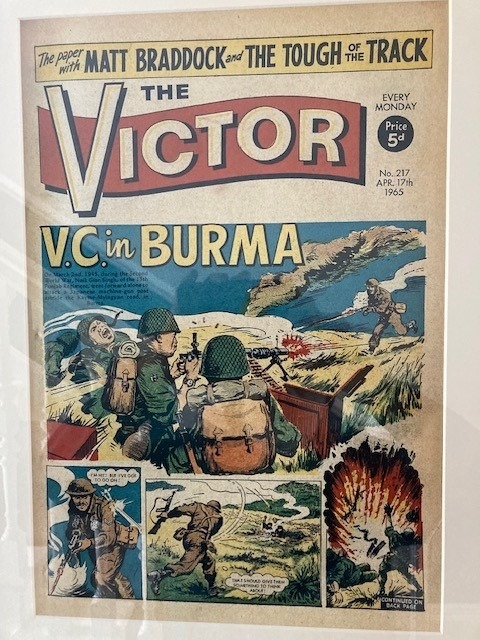
The situation was perilous. The Japanese were entrenched; their positions heavily fortified with a concealed anti-tank gun that had already destroyed two advancing tanks. “Our army could not move forward”, Charanjit recounts from Major Fowler’s descriptions. With casualties mounting, Naik Gian Singh acted with unbelievable courage. Wounded in the arm, he single-handedly charged the enemy foxholes. Armed with his Tommy Gun and grenades, he cleared several enemy positions, including a key weapons pit. Then, seeing the threat to the supporting tanks from the anti-tank gun, “he disregarded his own wounds and rushed forward once again”, eliminating the gun crew and capturing the weapon. His bravery broke the Japanese resistance in that sector, allowing the advance to continue. Though ordered to the Regimental Aid Post, he requested, and was granted, permission to lead his section until the entire operation was complete.
For this extraordinary gallantry, Gian Singh was awarded the Victoria Cross. He was featured in newsreels and in October 1945 he received the award from King George VI. It was his first visit to Britain, a world away from his Punjabi village. The experience was transformative. He observed the different way of life, later telling his family: “in England, people clean for themselves, they wash their dishes themselves. You should learn that!” Charanjit remembers an anecdote from that first visit: at a train station, his father, new to the customs and with limited English, mistook a ticket collector’s outstretched hand for a handshake, striding through the barrier without a ticket, much to the amusement of Major Fowler who was his translator.
Following India’s independence in 1947, Gian Singh continued his distinguished military career, joining the Sikh Regiment of the newly formed Indian Army. He remained a respected figure, though he “never used to talk about the war… To the family, he never talked.” His son Charanjit only truly began to understand the magnitude of his father’s VC when he accompanied him to the Victoria Cross and George Cross Association reunions in London. “Then all of a sudden I realised this is something big! Because we went to Buckingham Palace… I realised this is something big that my dad got!”
Honorary Captain Gian Singh VC passed away in 1996. His life was a journey from the quiet fields of Punjab along a route of dedicated service and legendary bravery that saw him honoured at the highest level. He was, in the words of his son, a “great dad, great soldier.” His legacy, carefully preserved and shared by Charanjit, continues to inspire, a powerful reminder of the deep roots and remarkable routes that shape the story of the Armed Forces community.
 South Asian Heritage Month dates changed to "July" from 2026 — Learn more here →