 South Asian Heritage Month dates changed to "July" from 2026 — Learn more here →

Part 2: A Decade of Discovery at Colourful Heritage in Scotland
Personal Reflections, Hidden Histories, and the Road Ahead As Project Officer for Colourful Heritage, my journey into the field of preserving South Asian and Muslim

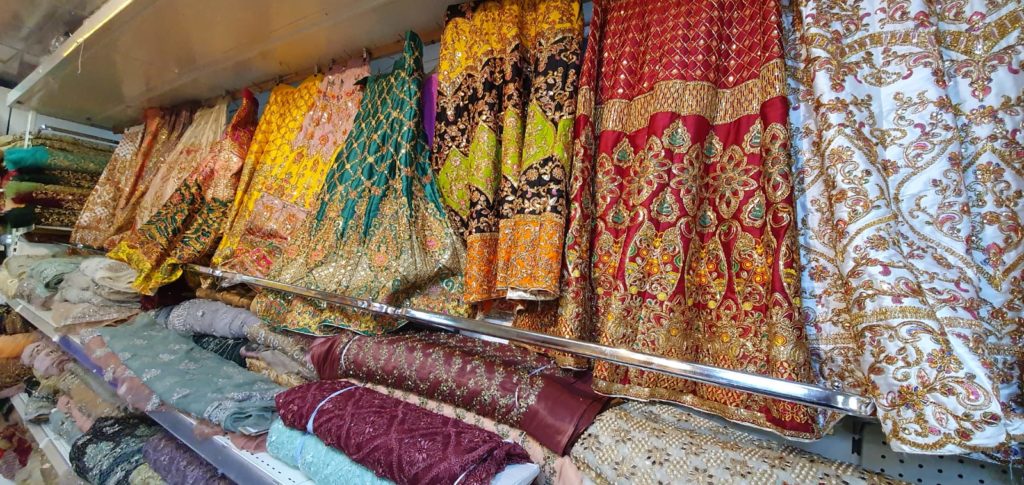
The rich tapestry of Scotland’s cultural landscape is woven with the vibrant threads of its South Asian community. Among one of the many most significant contributions of this community are the uncelebrated South Asian fabric shops in Glasgow, primarily run by women mainly in the Southside Govanhill area, namely Cathcart Rd and Allinson Street. They also existed within Woodlands Drive, Great Western Road as well as Paisley Road West. These not only brought exotic fabrics to Scotland but also created safe spaces owned by multi-faithed South Asian women for cultural exchange, fostered social cohesion and above all empowered women. They served as an important life line for many women. This article explores the origins, evolution, and multifaceted roles of these shops in Glasgow since the 1960s to present day, shedding light on their profound impact on both the South Asian and wider Scottish communities.
Their Origins and their Need
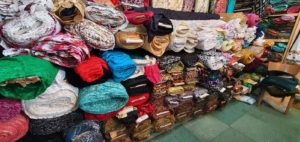
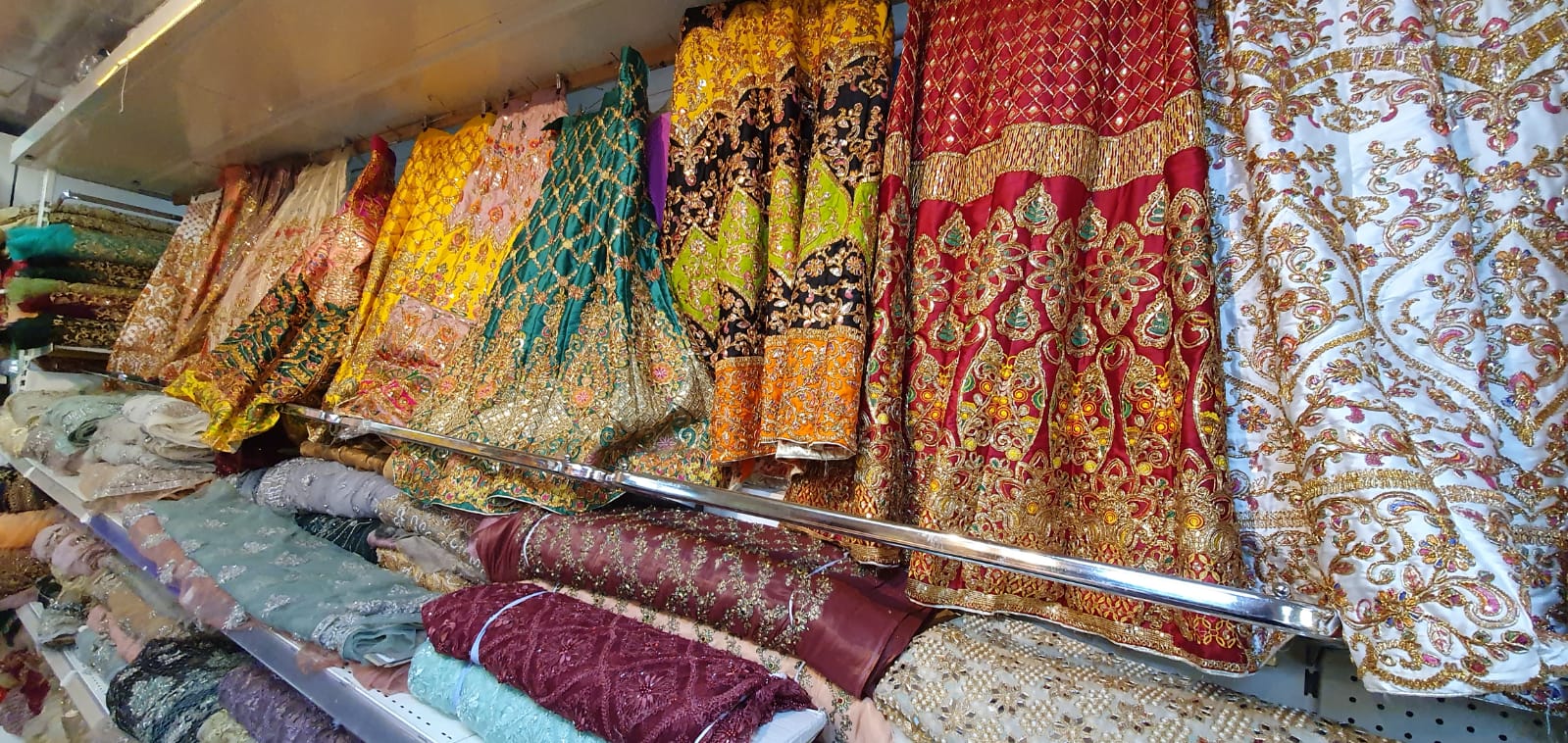
The story in Glasgow begins with a simple yet profound need: the need to buy loose material to sew covers for duvets and pillows that were brought over from India and Pakistan in the early days. During the 1980s it was the desire for traditional clothing and high-quality fabrics. In the early days, South Asian women found it challenging to source material for traditional clothing such as ‘saris’ or ‘kameez shalwar’ in Scotland. This led to a demand for loose materials, which women could buy to sew their own traditional outfits and clothes to fit the fashion of times. This usually involved a long shirt called a ‘kameez’ and trousers in the form of either a ‘shalwar’, Western style trousers or the more fitted version of pencil trousers. Additionally, these fabrics were often sought and stored for many months as gifts to send for relatives in Pakistan and India, prized for their superior quality compared to local options back home.
The initial journey of these shops, was a humble one. Many women started by storing wonderful colours and fabric varieties of rolls of fabric in a room in their homes, often selling and providing a service to friends & neighbours whilst gradually building a customer base. This modest beginning was driven by a combination of cultural necessity and entrepreneurial spirit. They also sewed clothes and performed alterations for others from home. As the demand increased and their families got larger, these home-based businesses outgrew their premises and expanded into formal shops, often with the support of their husbands. This transition from home to storefront symbolises the desire of South Asian women to demonstrate their entrepreneurial flair despite having no formal qualification or experience. They were also keen to contribute financially to their households and to gain financial independence.
Women at the Forefront: A Unique Scottish Landscape
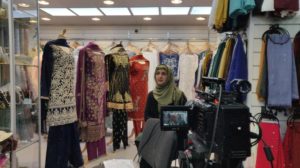
A notable feature in Scotland is that these businesses were and still are primarily run by women. This contrasts with the traditional male-dominated fabric businesses in countries like Pakistan and India, as well as in other parts of the UK. This unique landscape in Scotland reflects the strength, determination, and confidence of South Asian women having a ‘can do’ attitude in stepping into the entrepreneurial world. Even to the extent that very often they used their own names or female names to name their shops thus giving them a female identity.
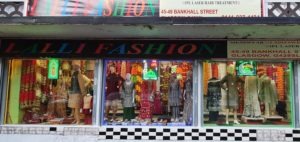
The involvement of women can be traced back to their backgrounds. Some either helped in family shops or came from business-oriented families. With initial support from their husbands and children these women found the confidence to establish and manage their own businesses. This shift not only empowered the women but also changed the dynamics of the South Asian business community in Scotland.
The Role of South Asian Fabric Shops in the Community
These fabric shops reached far beyond their commercial function; they played a pivotal role as centres for social connection, cultural exchange and in the forming and growing of the community, far beyond their commercial function. They became sacred spaces as hubs of social interaction, cultural exchange, and community support. Here are some of the critical roles they have played:
These provided a safe haven for women to break away from their daily chores and family life. becoming places where women could openly and freely communicate in their mother tongue, mainly Punjabi. Many had come over after marriage to settle in Scotland which was a new land to them, with a different culture where they didn’t know anyone. They would frequently visit so they could share their issues, seek advice, and make new friends, both young and old. This social interaction was vital, as many of these women had migrated over after marriage to Scotland therefore traditional support systems of having extended families or parents close by were lacking which would normally be heavily leaned on for social and family support especially when bringing up children. They became hubs where women would learn from others cooking tips and recipes and where very often, they brought their home cooking to share with friends and strangers to escape from the isolation many experienced at home. These shops inadvertently became information and advice centres, fostering a sense of community and belonging.
In the pre-mobile phone and satellite TV era, these shops were crucial in keeping the community connected with the latest trends and news from back home. They acted as lifelines, providing updates on fashion and social happenings mainly in Pakistan and India. This connection helped maintain cultural ties and provided a sense of continuity for the migrant communities.
They were also instrumental in promoting social cohesion among women from various faiths and backgrounds, including e.g., Muslims, Hindus, Sikhs, and the Scottish community. This unity became a reality in the South Asian fabric shops of Glasgow that became ‘melting pots’ where cultural and religious boundaries were bridged through shared interests and mutual respect.
One of the unique roles that such spaces played was in matchmaking. The owners often had a mental database of the community’s members and their families. They connected parents with one another or prospective partners for their children, fostering relationships and strengthening community ties. This informal matchmaking service was a valuable aspect of the fabric shop scene resulting in strengthening of community ties.
They provided employment opportunities for other women in the community to work both within the shop and from the comfort of their own homes. Many women worked from home, sewing clothes for the shop’s clients which not only provided them with a source of income but also allowed them to develop and hone their skills. They also gave an opportunity to many male tailors to make use of their unique skills. Thus, they played a crucial role in empowering more women as well as men economically and professionally.
In the absence of formal banking services, especially for women, these safe spaces often acted as informal banks where shop owners often extended credit to their customers which would be noted in the ‘book’, allowing them to buy material and pay later. Additionally, many shop owners organized ‘committees’ (known as Minoge or Menage in Scots), where women pooled money and took turns receiving a lump sum. This system provided access to significant amounts of money, which could be used for major expenses such as weddings, household appliances, or down payments for a house. Interestingly this also proved to be a very useful service to the many businessmen in the community to save and access large sums of money.
The entrepreneurial flair of the women owners led to diversification in their offerings. To survive and thrive in a competitive market, they had to continuously adapt to the everchanging customer demand and fashion. They introduced services such as stitching outfits for ladies ‘kameez & shalwar’ to keep up with various fashions and alterations and some even employed professional South Asian male tailors to sew in store. They also started to stock items of haberdashery including buttons and fancy laces and displayed some of the latest fashion designs as window displays so they would get orders to have clothes stitched. This also led to having ‘ready to wear’ outfits stocked in store. Often the kameez & shalwars would be designed with elements of East & West fusion designs to create a more appealing look for younger generation of women and girls. This ensured that their business remained relevant and attractive to a broader customer base.
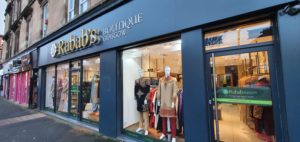
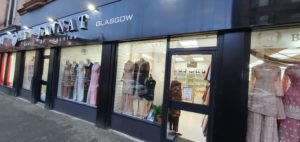
This innovation and adaptability are testaments to their business acumen. Nowadays shops stock less rolls of fabric and more ready to wear outfits for the whole family as well as a wide range of shoes and accessories for both men, women and children in order to offer a more holistic ‘one stop shop’ experience. Nowadays the South Asian and Muslim communities in Glasgow is vastly diverse compared with the 1980s and 90s with people from all around the world that have made Glasgow home. Therefore, the shops have also grown with their clienteles needs and diversified to stock fragrances, scarfs, modest Islamic wear such as ‘thobes’ (long shirts) for men as well as ‘abayas’ (overcoat) and long modest dresses for women. Some shops even cater for Western style Islamic wedding dresses (that are not traditionally South Asian style Lehngas, Shararas or Ghararas) that can now be hired for weddings or parties. Many businesses advertise and sell their clothing lines through social media, eliminating the need to have premises. This new business model diversifies the business needs and is appealing to a wider younger generation from both South Asian, Muslim and non-Muslim customers also.
In the early days, they also served as points of connection to various community services. Shop owners helped connect their customers with other service providers they got to know in the community, free of charge. This role as a connector strengthened community bonds and ensured that people were made aware and could access the services they needed.
Empowerment and Symbolism
The journey of South Asian fabric shops in Glasgow is a powerful symbol of empowerment and resilience. These businesses highlight the strength, determination, and entrepreneurial spirit of South Asian women in Scotland. By stepping into the business world, these women not only contributed to their household incomes but also gained financial independence and gained confidence.
The unique phenomenon of women running these shops in Scotland, contrasting with the male-dominated fabric businesses in South Asia and other parts of the UK, is a testament to the progressive role these women played in their community. Their success stories inspire future generations and underscore the importance of supporting women entrepreneurs in diverse sectors.
In 2024, BAFTA winning Director Felipe Bustos Sierra, a Culture Collective artist at Govanhill Baths was commissioned to make a short film called ‘Govanhill: A Community Film Portrait’. One of the areas the film explores is the role of fabric shops in the area. The film features rare interviews with Mr Ifzal Bari, son of the late Mrs Rashida Bari, who was amongst one of the earliest female entrepreneurs that stocked fabric rolls at home before opening her shop on Cathcart Road. Also features footage from the late Mrs Zarina Ahmed owner of one of the first South Asian shops on Cathcart Rd sharing the challenges she faced and the love and care of people within the community. She was warm and friendly natured; hence her shop was one of the most popular shops women visited in Govanhill.
Conclusion: A Legacy of Empowerment and Community Building
The South Asian fabric shops in Glasgow were much more than commercial entities; they were vital pillars of the community. They have fostered social cohesion, provided financial services, and created safe spaces for social interaction and cultural exchange. These shops have empowered women, offering them a path to financial independence and professional growth. They have also inspired the next generation of female entrepreneurs in a variety of other sectors whether it’s through opening online businesses, bakeries or cafes amongst a whole range of businesses. As we reflect on the legacy of these shops, it is essential to acknowledge the profound impact they have had on both the South Asian and wider Scottish communities as they have provided a service and a life line for the wider community these shops were based in. They symbolise the strength, resilience, and entrepreneurial spirit of South Asian women, who overcame cultural and societal barriers to create thriving businesses and vibrant community spaces where Pakistani, Indian and many other cultures thrived and evolved.
For decades the South Asian women who owned or worked at fabric shops were overlooked and their roles underestimated. The story of these shops in Glasgow serves as a powerful reminder of how female entrepreneurship, community support, and cultural exchange can transform lives and foster social harmony. Their legacy and that of their many trailblazing owners will continue to inspire and empower future generations of women to become entrepreneurial and self-employed, leaving an indelible mark on the cultural fabric of Scotland.
By Dr Saqib Razzaq, Project Officer & Head of Research, Colourful Heritage.
To read about one of the first South Asian fabric shop owners in Glasgow, the late Zarina Begums story visit ‘Resistance and Community: Govanhill Pool and my mothers fabric shop’.
To discover more about the South Asian Fabric shops (including the late Zarinas Begums interview) watch the Govanhill (2024) documentary (from 12-20 mins) directed by Felipe Bustos Sierra.
Discover the digital resources by Colourful Heritage in following article: ‘Preserving Scotland’s South Asian and Muslim Heritage’
To watch and hear the DemocraTea podcast with former MP, Anum Qaiser and Dr Saqib Razzaq celebrating Colourful Heritage visit: We Didn’t Arrive Yesterday | South Asians in Scotland
Contact & Social Media details:
Email: [email protected]
Facebook: www.facebook.com/ColourfulHeritage
Twitter: @ColourHeritage
Web: www.colourfulheritage.com
YouTube: www.youtube.com/Colourfulheritage
Personal Reflections, Hidden Histories, and the Road Ahead As Project Officer for Colourful Heritage, my journey into the field of preserving South Asian and Muslim
Making Heritage Visible via Projects, Partnerships, and Public Impact The year 2026 feels both like a milestone and a moment for quiet reflection. Ten years
A Story of Female Entrepreneurship, Empowerment and Community The rich tapestry of Scotland’s cultural landscape is woven with the vibrant threads of its South Asian