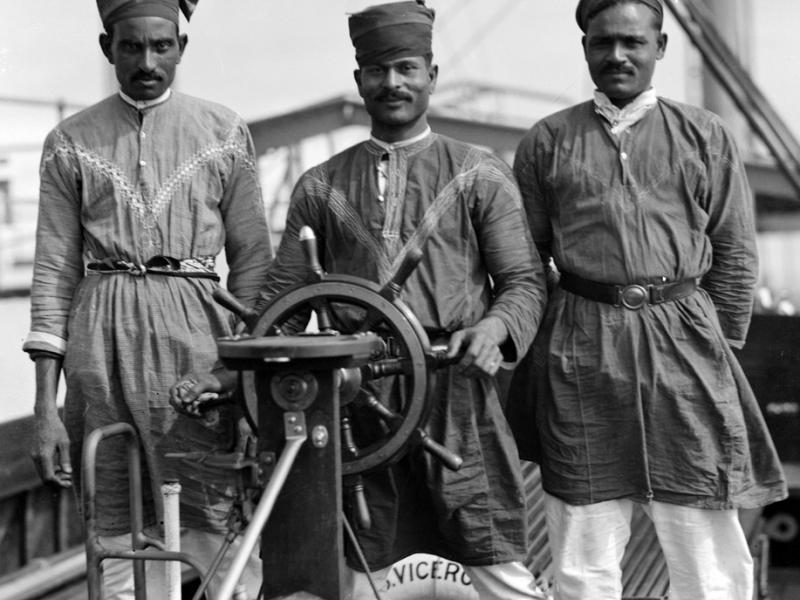
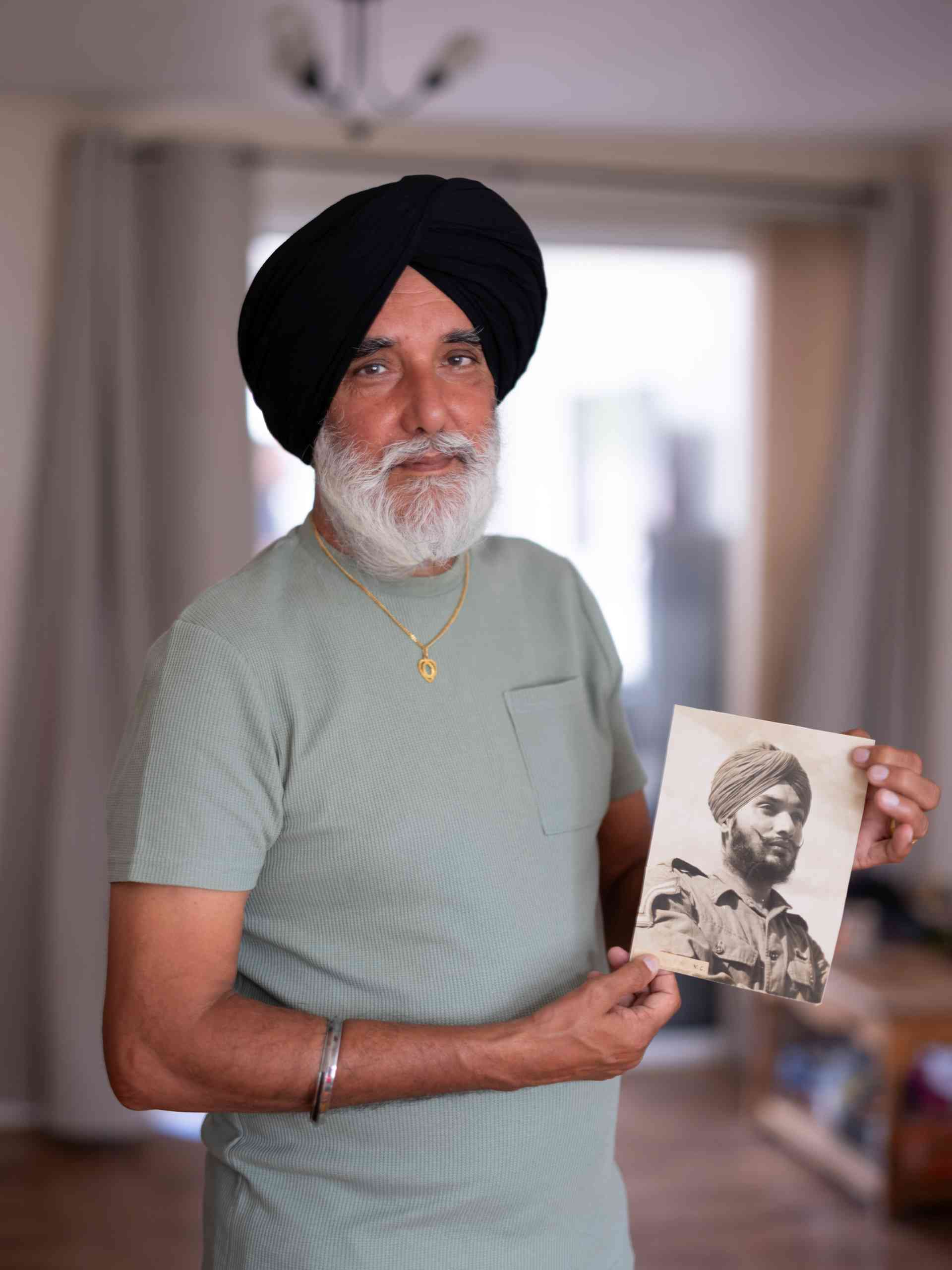
Their journeys, forged along the maritime routes of trade and conflict, are an integral part of Britain’s history and its connection to the world but remain forgotten heroes of the World Wars.
The term ‘lascar’ (from the Persian ‘lashkar’ for army or camp) evolved to identify these non-European sailors who, from the 16th century onwards, became the backbone of European merchant shipping. By the 19th and 20th centuries, particularly with the rise of steam navigation and the opening of the Suez Canal, their role became indispensable. Lascars became vital as firemen and trimmers in the engine rooms, performing arduous tasks often shunned by European mariners. By the outbreak of the First World War in 1914, over 51,000 lascars made up 17.5% of the workforce on British-registered ships. Their roots were spread across vast territories, predominantly British India – with many hailing from Bengal, Gujarat and the Malabar Coast – but also Yemen, Somalia, China and beyond.
From the 17th century, the East India Company’s expansion fuelled a demand for their skills. Ports including Liverpool, Cardiff, Hull, South Shields and in London’s Limehouse, Shadwell and Wapping areas became familiar, temporary homes between voyages. Some, by choice or circumstance, settled and laid the foundations of some of Britain’s earliest South Asian communities. The Strangers’ Home for Asiatics, Africans and South Sea Islanders, opened in Limehouse in 1857, offered some respite and support, though conditions for many remained precarious.
Service in the World Wars
In the World Wars the Lascars were not just civilian sailors; they were on the front line of global conflicts at sea, manning the merchant ships that were the lifelines of the Allied war effort. These vessels, carrying troops, munitions, food and essential supplies, were prime targets for enemy U-boats and aircraft.
During the First World War, some 80,000 Lascars served with extraordinary commitment. Despite facing racial discrimination, enduring harsh working conditions, and receiving significantly lower wages than their European counterparts, their contribution was immense. They kept the vital supply routes open, facing the constant threat of attack. The towering, 30m high Lascar War Memorial in Kolkata, unveiled in 1924, pays tribute to the 896 seamen from Bengal, Assam and Upper India who lost their lives in the First World War. Thousands more perished at sea, their sacrifices often unrecorded with the same diligence as their European comrades. India Office Records estimate that war casualties were around 3,427.
The Second World War saw an even greater reliance on Lascar crews. Over 100,000 served in the British Merchant Navy. These seamen served throughout the war, and supported the landing operations in Italy, France and Burma. The perils were relentless: long, arduous voyages under the constant shadow of enemy action. Indian sources estimate that 6,600 Indian seamen died, 1,022 were wounded and 1,217 were taken prisoner.
East London remained a critical touchpoint throughout these conflicts. The docks were central to the war effort, and the Lascar community, though facing the dangers of bombing raids, contributed significantly both to maritime operations and to the resilience of the home front.
Lascar Legacy
The hardships faced by Lascars were profound. They were often assigned the most dangerous tasks, lived in substandard conditions aboard ships and, even after their immense contributions to the war efforts, many veterans found it difficult to secure the recognition, pensions and rights afforded to other veterans. Many were employed under ‘Asiatic Articles’, which offered less protection and lower pay than their European counterparts.
Yet, their legacy endures. The multicultural fabric of areas like East London owes much to these early seafarers and settlers. The East London Mosque, established in 1910, became an important spiritual and community hub. Today, efforts to bring their stories out of the shadows are growing. The Museum of London Docklands features exhibits on their history. Memorials, such as the P&O headstone in Dover for the 22 Lascar crew members of the SS Maloja sunk in 1916 and the careful restoration of the Lascar War Memorial in Kolkata, serve as important reminders of the sacrifices.
 South Asian Heritage Month dates changed to "July" from 2026 — Learn more here →